
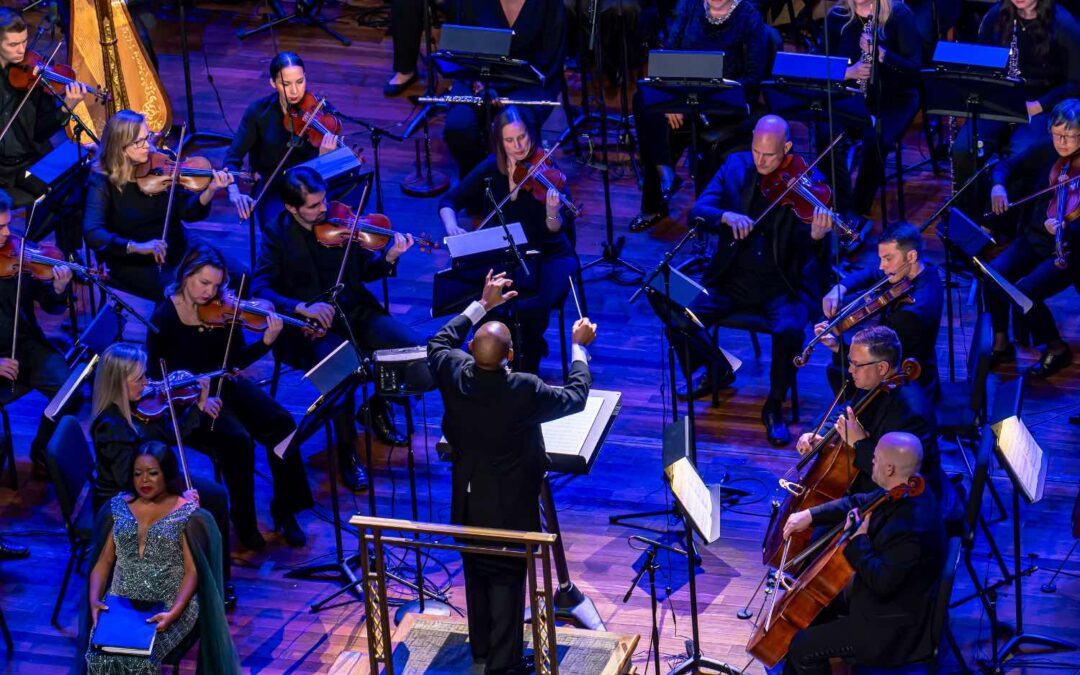
This article is adapted from Dr. Jeffery L. Ames’ interview featured in the PBS broadcast of Requiem for Colour: A Journey through Lament and Joy. The narrative has been paraphrased and edited for clarity and length, while preserving Dr. Ames’ original intent and insights.
Inside Requiem for Colour: A Movement by Movement Journey with Dr. Jeffery L. Ames
Requiem for Colour: A Journey through Lament and Joy is more than a concert. It is a timeline. In this conversation from a PBS performance, Dr. Jeffery L. Ames shares the story and inspiration behind every movement.
1. Celebration Alpha — Where It All Begins
The Requiem opens not in sorrow, but in joy. We hear the sounds of Guinea — Susu celebration rhythms, drumming, singing, and dance. The community is gathered in vibrancy, until drum bells sound. A warning. Something is coming.
2. Terrorized, Trapped, Trafficked — The Turn
The second movement shifts into chaos. The orchestra becomes unsettled, with fast-changing meters that feel like pursuit and panic. Then the music moves into darkness — the holding dungeons of the slave castles on the West African coast. Here the orchestra hints at Go Down, Moses before the final section carries us across the Atlantic.
For Dr. Ames, this is the horror of capture and the forced crossing.
3. Introit / Kyrie & 4. Lord, How Come Me Here? — A Strange Land
A new life begins in a strange land. The first words the enslaved sing are Kyrie eleison — Lord, have mercy — first in a West African language, then echoed in seven others, finally resting in Latin.
Out of this lament, a new musical language was born. The slave songs that were passed down orally became the Negro Spiritual, which Dr. Ames calls the foundation of this entire Requiem. This section closes with the soprano solo Lord, How Come Me Here? — a lyric that holds generations of pain and beauty.
5. Dies Irae — The Day of Wrath
The Dies Irae was the first movement Dr. Ames wrote for the Requiem, in early 2022. Where many composers make this movement fierce — think Mozart or Verdi — he took inspiration from film composer John Williams. He imagined the dark side of the story, the Empire marching into battle, to capture the weight of judgment and injustice.
6. Elegy for Lost Souls — Honoring Those Known Only to God
Written in September 2022, this movement is reverence. Scored for solo cello and strings, it begins on a single, hollow unison pitch, giving space for the cello to mourn and remember. The sound world is inspired by works like Elegy for Dunkirk and the score for 1883. As it unfolds, the first violins carry in the spiritual Sometimes I Feel Like a Motherless Child — a tribute to the countless souls whose names history did not record.
The Roots of Black American Music
For Dr. Ames, the Spiritual is ground zero. As historian Rev. Dr. Wyatt T. Walker teaches, from the moans and utterances of the enslaved came the Spiritual, and from the Spiritual came Ragtime, Blues, Jazz, R&B, Black church music, and Gospel. The next four movements celebrate that legacy.
7. Sanctus — A Tribute to Jazz
Beginning in cool jazz and blossoming into the full big band sound made famous by Duke Ellington and the Harlem Renaissance, the Sanctus honors the Black community that created jazz. It features our tenor soloist.
8. Benedictus — Blessed Is He
Blessed is he who comes in the name of the Lord. Intimate and reverent, the melody is shared between oboe and soprano.
9. Agnus Dei — Old Meets New
It begins with Renaissance-like simplicity in the choir, with an accompaniment inspired by Fauré’s Libera Me. That foundation opens up into lush, Romantic harmony.
10. Communion: In Remembrance —
Through Grief Toward Healing
Originally written in 2006 for choir, horn, and piano, In Remembrance found its home in the Requiem. Listeners often say it walks through the stages of grief — denial, anger, bargaining, depression, and acceptance — toward peace.
11. Libera Me — The Fight for Justice
Deliver me, Lord, from death eternal. Dr. Ames describes this as the clarion call of Black resilience since 1619. Through research into slave narratives, Black poetry, and the history of sharecropping, Jim Crow, and the Civil Rights movement, this movement became the demand for justice.
Musically, its chord progressions connect to classics like Caccini’s Ave Maria, Gloria Gaynor’s I Will Survive, and Roberta Flack’s Killing Me Softly — timeless progressions now infused with the energy of Hip Hop and Rap to speak to today.
12. In Paradisum
A moment of peace and rest after the struggle.
13. Celebration Omega: Heaven — The Final Home
We end where generations of Black sojourners fixed their hope — on Heaven. Composed in the traditional Gospel style, this finale weaves together the spirituals Oh, What a Beautiful City and Two Wings with the beloved gospel song Twelve Gates to the City.
As Dr. Ames reflects: This Requiem traces happiness, terror, fear, freedom, honor, reckoning, peace, joy, and finally — hope. Hope that our ancestors would be proud. Hope that keeps us working for justice. And hope for a home in that city where the streets are paved with gold.
"Through a Requiem, we have chronicled the Black American experience: happiness, terror, fear, depression, freedom, celebration, honor, reverence, reckoning, peace, joy, and hope."
Dr. Jeffery L. Ames
Requiem for Colour: A Journey through Lament and Joy
PBS Broadcast